Which fabric should you choose for a custom suit in Bangkok? Start with how often you will wear it, where you will wear it and the finish you prefer. Wool, merino wool, cotton and linen offer different possibilities. A Super number describes wool fibre fineness; it does not tell you everything about the cloth or guarantee that it suits your needs.
At Star Fashion Bangkok, our fabric selection includes wool and merino wool, with Super-number options from 110s to 220s, alongside cotton and linen. Ask our team to show the current cloths and confirm the composition, label, price and suitability of the particular fabric you choose. Our shop is at 37 Rambuttri Road, near Khao San Road, Bangkok.
Wool and merino wool: understanding the difference
Merino is wool from Merino sheep, rather than a separate synthetic material. Fibre fineness contributes to its feel, while the finished cloth also depends on yarn, weaving and finishing. A fabric labelled merino can therefore have a different weight or surface from another merino fabric.
Wool can absorb and release moisture vapour, which helps explain its use beyond cold-weather clothing. A warm-weather suit still needs careful fabric and construction choices. Compare actual swatches and discuss how much time you expect to spend outdoors, in transport and in air-conditioned spaces. The Woolmark explanation of wool’s breathability provides further background on the fibre.
What do Super 110s to Super 220s mean?
The Super S system refers to the maximum mean diameter of the wool fibres, measured in microns. Higher numbers correspond to finer fibres. It is not the same as cotton thread count, fabric weight or the number of threads visible in a weave. Avoid choosing cloth on the number alone.
| Label | Maximum mean fibre diameter |
|---|---|
| Super 110s | 18.25 µm |
| Super 120s | 17.75 µm |
| Super 130s | 17.25 µm |
| Super 150s | 16.25 µm |
| Super 180s | 14.75 µm |
| Super 200s | 13.75 µm |
| Super 220s | 12.75 µm |
Source: Woolmark fibre-quality specification, reproducing IWTO Super S limits. These figures explain the labels; they are not laboratory test results for our stock.
Is a higher Super number always better?
A higher number tells you about fibre fineness, not which fabric is the best choice for every customer. Before comparing prices, compare the actual cloth: how it feels, its weight, its weave and its intended use. Ask what care the chosen fabric needs and whether it suits the frequency with which you plan to wear the garment.
For a suit you will use regularly, explain your working routine, travel and comfort preferences. For a suit reserved for special occasions, tell us the setting and the appearance you want. We can then discuss the available cloths rather than assuming the highest number must be the right answer.
Fabric weight, weave and lining need their own discussion
Two fabrics with similar fibre labels can make different garments. Ask about the weight of the actual cloth and look closely at the weave. Hold a sample against you and see how it hangs. Discuss the lining and construction separately: a light-feeling swatch does not describe the entire finished jacket.
If you will wear the suit in Bangkok and then take it to another country, explain both uses. A single word such as “summer” is less useful than telling us where you will spend time and what you need the outfit to do.
Cotton for shirts and relaxed tailoring
Cotton is an absorbent natural fibre used in many shirts and casual garments. Cotton fabrics can crease during wear, and their appearance and care needs depend on the weave and finishing. Compare a crisp-looking shirt cloth with a softer one rather than treating all cotton as identical. See CottonWorks’ guide to fibre properties for general background.
For a custom shirt, explain whether you will wear it under a jacket, with an open collar or on its own. Ask how transparent the chosen cloth appears, how it feels against the skin and what care instructions apply. For cotton tailoring, discuss the finish you want and how much visible creasing you are comfortable with.
Linen for texture and a relaxed look
Linen is made from flax. It is associated with a textured appearance and warm-weather clothing, and its creasing is an important part of the decision. The Alliance for European Flax-Linen & Hemp discusses linen’s ventilation and moisture-management properties.
When considering linen for a wedding or a Bangkok visit, compare the cloth in person and discuss whether you want a relaxed appearance or a more structured look. Pure linen and a linen blend are different descriptions; ask for the composition of the particular swatch rather than relying on appearance.
Pure fabrics and blends: read the actual composition
Do not assume a cloth is pure wool, pure cotton or pure linen from how it looks. Ask for the fibre percentages and review the label with our team. A blend should be evaluated for what it is, alongside the weight, feel, finish and proposed garment.
The same care applies to origin and brand names. Confirm the details of the fabric selected for your order. A photograph of a swatch book or a general fabric guide is not a substitute for identifying your chosen cloth.
Choosing fabric for business, weddings and travel
Business clothing: tell us how often you will wear the suit and how you travel to work. Compare fabric options around those needs, along with colours that fit your existing shirts and shoes.
Wedding tailoring: share the event date, dress code, setting and wedding-party plans. Look at fabric and colour together, and bring a reference if you are coordinating outfits. Read our guide to planning a wedding suit in Bangkok.
Travel: tell us the destination, time available for fittings and how you expect to carry and care for the garment. Agree on the schedule before ordering. Worldwide shipping is available, with timing and costs confirmed separately.
What to ask at your fabric consultation
Ask: What is the composition? What does the label describe? What is the weight? Which garment does this cloth suit? What care does the finished garment need? What is included in the quote? Compare a small selection in person and keep a record of the cloth agreed for your order.
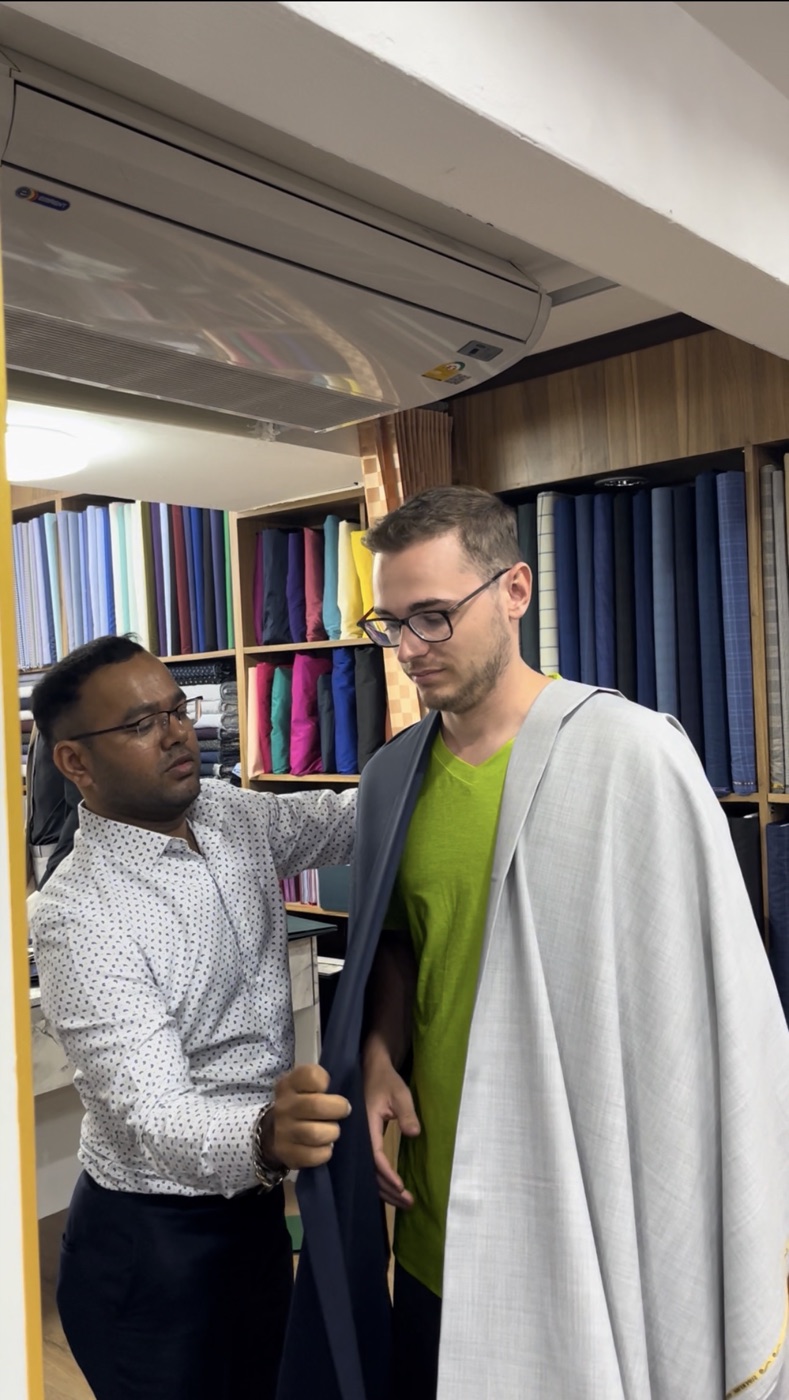
Our photograph shows fabric draped over a customer’s shoulders during a consultation. It is a practical way to explore colour and drape as part of a conversation. It does not mean every fabric shown has the same composition or performance.
Frequently asked fabric questions
Is merino wool different from wool?
Merino is a type of sheep’s wool. It describes the source of the fibre; the finished fabric still has its own weight, weave, composition and care requirements.
Does Super 220s mean the cloth is heavier than Super 110s?
No. The Super number describes wool fibre fineness. Ask about fabric weight separately.
Can I compare Super 110s through Super 220s at your shop?
Our range includes Super-number options from 110s to 220s. Contact us about the current selection and confirm the label and composition of your chosen cloth before ordering.
Can I choose cotton or linen instead of wool?
Yes, we offer cotton and linen options as well as wool. Discuss the garment and finish you want so we can compare suitable available fabrics with you.
Which fabric is best for a suit in Bangkok?
There is no single answer for everyone. Your occasion, time outdoors, wearing frequency and comfort preferences should guide the choice alongside the actual cloth and jacket construction.
Can I wash a tailored suit like a shirt?
Do not assume that. Follow the care instructions for the complete garment, including its lining and construction. Confirm care with our team before cleaning.
Compare fabrics at Star Fashion Bangkok
Visit our family-run tailor shop at 37 Rambuttri Road, near Khao San Road, Bangkok. We have been tailoring since 1994, across three generations of our family. Bring your ideas, travel dates and questions. Our team will help you compare the available wool, merino wool, Super-number cloths, cotton and linen options before you decide.
Explore our family’s tailoring story, see real customer outfits or prepare preliminary readings with our photo measurement guide.